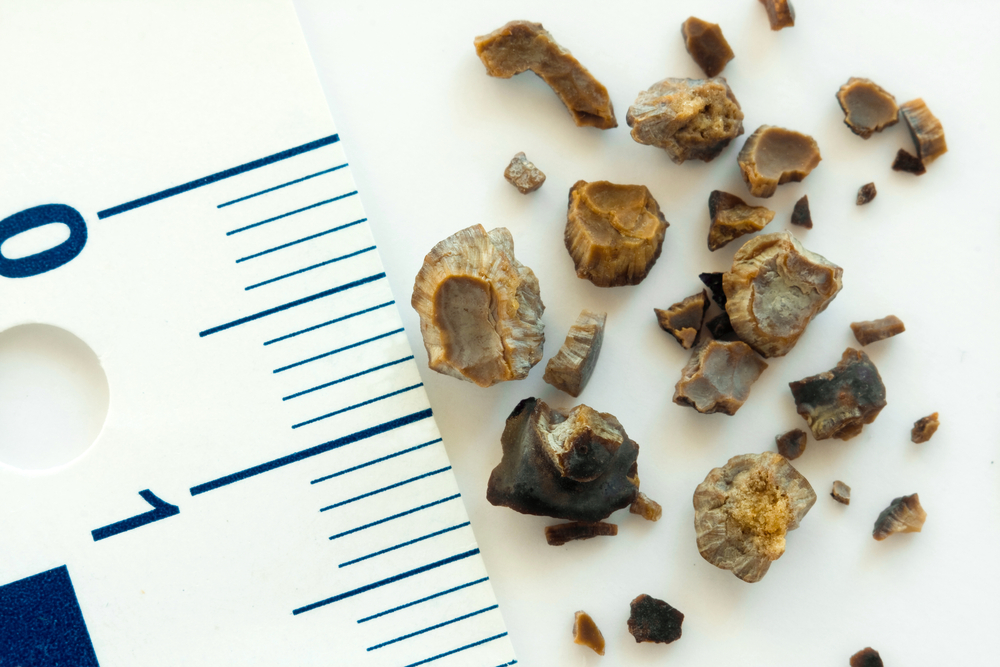
Kidney stone disease continues to be one of the most prevalent and agonizing disorders in urology, impacting millions around the globe annually. Worldwide statistics indicate a persistent increase in incidence (over 100 million new cases in 2021), making prevention and long-term management a critical concern for both healthcare professionals and patients. Despite notable progress in minimally invasive treatments, numerous patients still pose the common question: “Is there a natural remedy that can assist in preventing stones or help me pass them?”
Phytotherapy (the application of plant-based treatments) has been an element of traditional medicine for centuries. Long before the advent of ureteroscopy and shock wave lithotripsy, healers utilized botanical extracts to alleviate pain, enhance urination, and facilitate stone passage. In today’s context, driven by renewed interest in natural health methods, phytotherapy has resurfaced in clinical conversations. However, to what extent is this traditional approach backed by contemporary evidence?
The subsequent overview encapsulates current findings from clinical studies, systematic reviews, and preclinical investigations.
**Which patients may gain advantages?**
Not all types of stones show the same responsiveness to phytotherapy. Calcium stones, constituting 80-85 percent of cases, seem most responsive to plant-based treatments. Uric acid stones may also benefit due to influences on urine pH and uric acid metabolism.
Conversely, struvite (infection) stones and cystine stones do not respond to phytotherapy; these necessitate targeted medical treatments or surgical interventions.
Risk assessment remains crucial:
– Low-risk stone formers (small stones, infrequent episodes, no underlying metabolic issues) may effectively employ phytotherapy as complementary treatment.
– High-risk stone formers (including those with recurrent stones, brushite stones, uric acid stones, chronic kidney disease, or a single kidney) require guideline-centered metabolic assessment and pharmacological therapy. For such patients, phytotherapy on its own is inadequate.
**How do these herbal agents function?**
While mechanisms vary among preparations, phytotherapy generally operates through one or more of the following:
– Increasing urine volume
– Boosting urinary citrate levels
– Lowering urinary calcium, oxalate, or uric acid
– Inhibiting crystal nucleation, growth, and aggregation
– Offering antioxidant and anti-inflammatory properties
These mechanisms are biologically plausible and supported by an expanding array of literature, although the evidence quality differs.
**Clinical evidence: what do we know up to now?**
A recent narrative review aggregates existing clinical and preclinical studies regarding phytotherapy in urolithiasis, showcasing encouraging effects on stone size, expulsion, and urinary chemistry while stressing that evidence is still limited and not standardized.
**Single-herb treatments**
Phyllanthus niruri (“stone breaker”) is arguably the most researched herb in nephrolithiasis. Studies indicate it can:
– Increase urinary magnesium, potassium, and citrate
– Decrease oxalate and uric acid in specific patients
– Aid the passage of small stones (<3-4 mm)
Effects tend to be more limited in larger stones.
Randomized trials involving Nigella sativa (black seed) report:
– Expulsion rates reaching 44 percent, contrasted with 15 percent in placebo
– Notable reduction in stone size in over half of the treated participants
Phaseolus vulgaris (common bean broth) shows increased urine volume, diminished urinary calcium and oxalate, and quantifiable reductions in stone size and count.
**Multi-herb combinations**
Commercial blends exhibit significant variation in quality and efficacy:
– Cystone: Mixed findings
– Wu-Ling-San: Boosts urine output in the short term; limited evidence for long-term prevention
– Five-herb mixtures (Tribulus, Urtica, corn silk, etc.): Enhanced expulsion rates and urine volume in certain randomized controlled trials
**Renalof: the most reliably supported choice**
Among commercial formulations, Renalof currently has the strongest clinical backing. Numerous randomized studies reveal:
– Stone expulsion rates of 65-86 percent (compared to 11 percent in placebo)
– Significant decrease in stone surface area and volume
– Optimal outcomes for stones <10 mm
The AMMOS study indicated about a 25 percent reduction in stone volume at 3 months, suggesting clinical effectiveness as both preventive and supplementary therapy following shock wave lithotripsy or ureteroscopy.
**Where phytotherapy fits (and where it does not)**
Phytotherapy should not replace guideline-driven management. It cannot stand in for thiazides, potassium citrate, allopurinol, or infection-targeted therapy. Additionally, it cannot address large, obstructive, or complex stones.
Where phytotherapy may prove beneficial:
– Small, non-obstructive stones
– Assisting in fragment clearance post-shock wave lithotripsy or ureteroscopy
– Complementary prevention for low-risk stone formers
– Patients pursuing evidence-based natural alternatives
Areas requiring caution: Individuals with chronic kidney disease, solitary kidney, recurrent large stones, or those susceptible to electrolyte imbalances should steer clear of specific herbal diuretics, which may exacerbate their conditions.