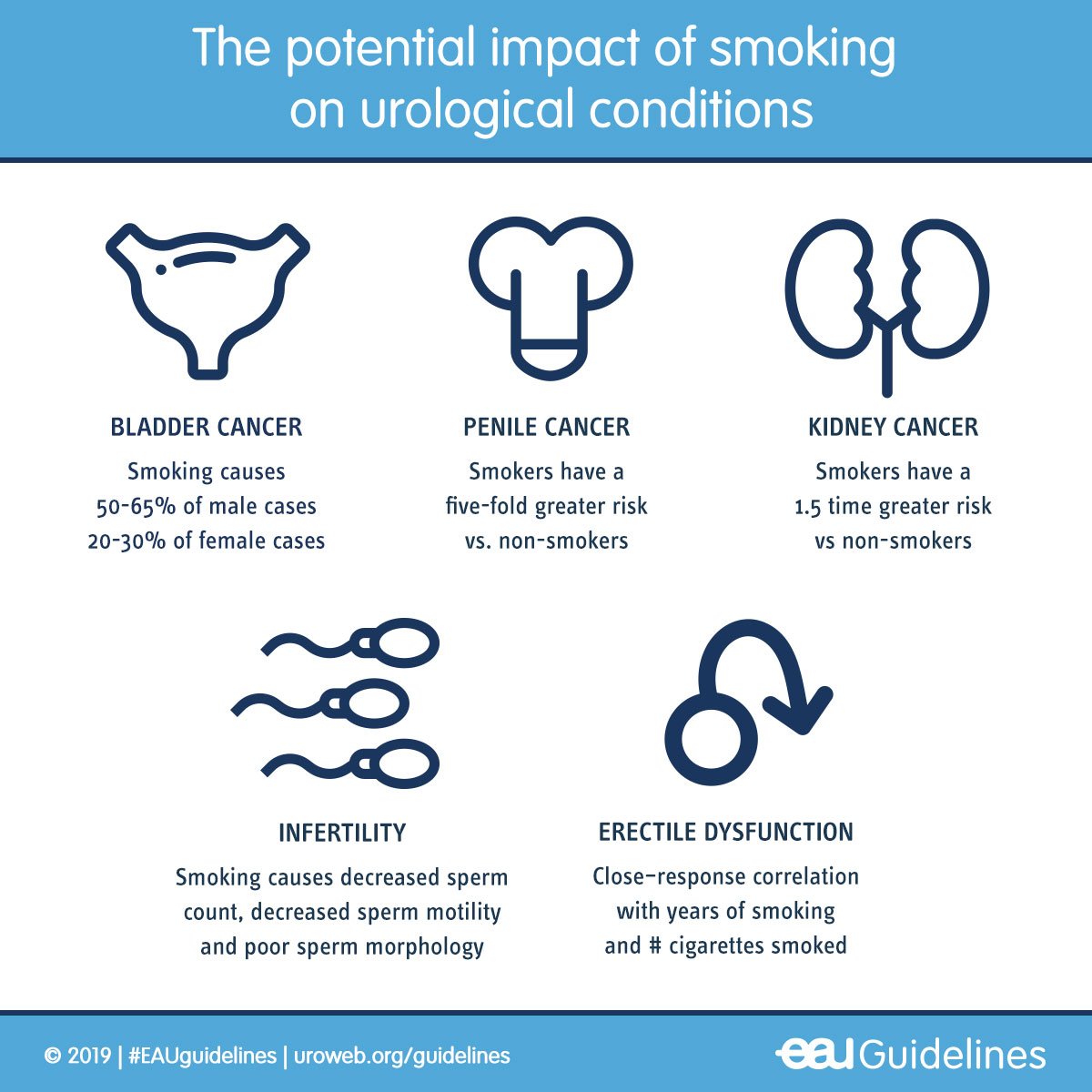
Bladder cancer ranks among the most prevalent cancers globally, yet it often garners significantly less awareness than other cancers associated with smoking. According to the [GLOBOCAN](https://gco.iarc.who.int/media/globocan/factsheets/cancers/30-bladder-fact-sheet.pdf) global cancer fact sheet, bladder cancer is listed among the top 10 most commonly diagnosed cancers in the world, with over half a million new cases identified annually. It occurs with notably greater frequency in men compared to women, and the risk increases consistently with age.
While certain risk factors such as age, gender, and genetic predisposition remain unchangeable, smoking stands out as the most significant preventable contributor to bladder cancer globally.
**The strong connection between smoking and bladder cancer**
Many individuals primarily link smoking to lung cancer, but the bladder is also directly subjected to tobacco toxins. When an individual smokes, toxic chemicals from cigarette smoke seep into the bloodstream. The kidneys process these substances, which are eventually expelled through urine. As urine accumulates in the bladder, the bladder lining is repeatedly subjected to these carcinogenic agents over time.
[Global data](https://pubmed.ncbi.nlm.nih.gov/32972792/) indicate that approximately 50 percent of individuals diagnosed with bladder cancer are current or former smokers. There are [studies](https://pmc.ncbi.nlm.nih.gov/articles/PMC6159806/) suggesting that individuals who do not smoke but are habitually exposed to secondhand smoke face a higher risk compared to those who are not exposed.
Smoking heightens the risk of bladder cancer by:
– Causing damage to the DNA of bladder cells.
– Inducing chronic inflammation of the bladder lining.
– Impairing the immune system’s capacity to identify and eliminate abnormal cells.
Over time, this [accumulated damage can result in cancer development](https://pmc.ncbi.nlm.nih.gov/articles/PMC3210924/).
**Are e-cigarettes a safer option for the bladder?**
E-cigarettes are frequently promoted as a less harmful alternative to conventional smoking, yet emerging evidence raises significant concerns. [Studies](https://pubmed.ncbi.nlm.nih.gov/34920944/) have identified potentially harmful substances from e-cigarette aerosols present in urine, indicating that the bladder continues to be exposed to toxic compounds. As long-term evidence remains scarce, e-cigarettes cannot presently be deemed safe for bladder health.
**Common methods for detecting bladder cancer**
The primary indicator of bladder cancer is often blood in the urine, which may be painless and appear sporadically. Additional signs can include increased frequency of urination, urgency, or discomfort during urination. Diagnosis typically involves urine tests, imaging, and a cystoscopy, a procedure that enables doctors to directly visualize the bladder.
The history of smoking can influence not only who develops bladder cancer but also the aggressiveness of the condition at the time of diagnosis.
**The benefits of quitting smoking, even after diagnosis.**
An essential message for patients is this: it is never too late to quit smoking.
[Research](https://pmc.ncbi.nlm.nih.gov/articles/PMC10241723/) indicates that:
– About a decade after quitting, the risk of developing bladder cancer decreases by up to 50 percent.
– After 20-25 years of cessation, the risk resembles that of individuals who have never smoked.
– Patients who persist in smoking post-bladder cancer treatment experience a higher likelihood of recurrence compared to those who quit.
Ceasing smoking enhances both cancer-specific outcomes and overall health.
**Smoking cessation should be integral to treatment, not just advice**
From a medical viewpoint, quitting smoking ought to be regarded as a component of bladder cancer treatment, rather than mere lifestyle advice. Patients who receive comprehensive education and support to quit smoking typically experience improved long-term outcomes, lower rates of recurrence, and enhanced quality of life.
Consequently, many urologists now view smoking cessation counseling as critical as surgery, medications, and follow-up care.
**A concluding message for patients**
Bladder cancer has a strong association with smoking, but this also highlights a tangible opportunity for prevention and improved outcomes. Quitting smoking reduces the risk of developing bladder cancer, diminishes the odds of recurrence, and enhances long-term survival even after diagnosis.
If you smoke and observe blood in your urine, seek medical assistance promptly. Additionally, if you have been diagnosed with bladder cancer, remember that stopping smoking is one of the most significant actions you can take for your recovery and future well-being.