Are Vegetable and Seed Oils “Harmful”?
From TikTok trends to top-selling books, vegetable oils—also known as “seed oils”—are currently a hot topic. To be fair, discussions about the value of vegetable oils have been ongoing since they first became available in the market. Recently, however, with the rise of the carnivore diet, criticism of vegetable oils has surged on social media. You may have seen posts labeling these cooking oils as “toxic sludge,” “motor oil,” “the hateful eight,” and “the leading cause of chronic illness that few are aware of.”
The anti-vegetable oil argument goes something like this: Animal fats have been part of human diets for thousands of years. On the flip side, vegetable fats emerged in the last century as profit-driven companies sought ways to market inexpensive, mass-produced foods to unsuspecting buyers.
Another point raised: Just as margarine was promoted as a healthier substitute for butter, some argue, these oils are worse than butter, increasing the risk for obesity, anxiety, depression, ulcerative colitis, and more.
In contrast to this perspective, other specialists will argue that vegetable oils are safe and might even promote health—definitely a better choice than butter. So, who is correct?
Like many nutritional discussions, the reality is too complex to be simplified into a meme.
In this article, we will help you distinguish between science and pseudoscience so you can make educated choices about the oils you decide to include in your diet.
What are Vegetable Oils?
Often referred to as “seed oils,” vegetable oils are derived, as you may guess, from the seeds of plants. The most commonly found ones in a standard grocery store include:
- Canola oil
- Corn oil
- Safflower oil
- Sesame oil
- Sunflower oil
- Soybean oil
- Grapeseed oil
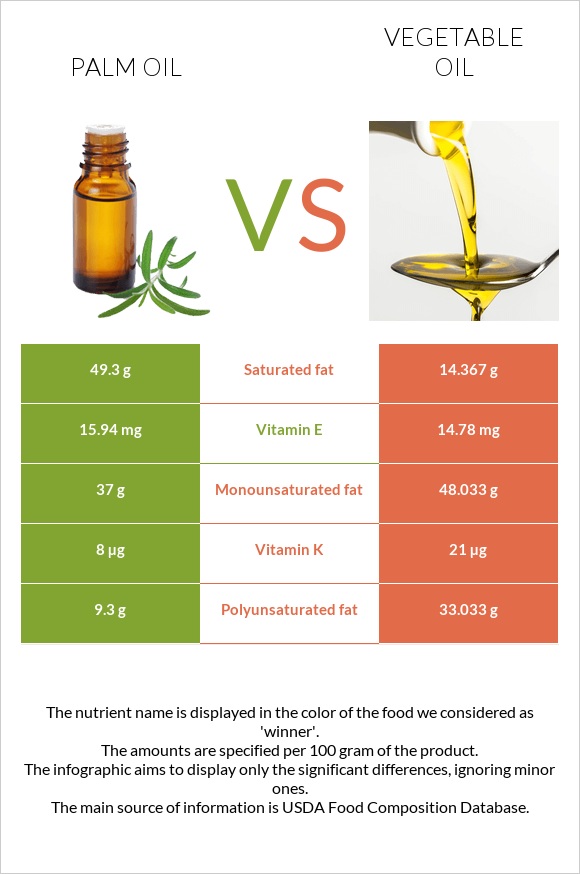
Additionally, if you notice some oils are absent from that list, it’s likely because those oils are from non-seed plants (such as olive, avocado, palm, or coconut oil, which all derive from fruits, and aren’t categorized as vegetable or seed oils).
How are Vegetable Oils Processed?
Unlike vegetable oils, non-vegetable oils—like olive and avocado oil—come from naturally fatty foods. In fact, olives are so rich in oil that you could theoretically produce your own olive oil at home. This cannot be said for most vegetable oils, which primarily come from foods with a relatively low fat content initially.
For example: A cup of green olives has around 20 grams of fat, while a cup of corn has only 2 grams.
Consequently, producers must follow a lengthy multi-step process to extract the minimal amount of oil from these low-fat foods. These steps include:
- Crushing: Equipment utilizes high pressure to extract oil from the seeds.
- Refining: The seeds are heated with a solvent, such as hexane, to draw out even more oil.
- Deodorizing: To achieve a neutral flavor and eliminate undesirable compounds, the extracted oil is cooked at 400 F (204 C) for several hours.
Throughout this process, beneficial polyphenols and other stabilizing nutrients are lost, and small quantities of unsaturated fats are converted into trans fatty acids (also known as partially hydrogenated fat).
(An interesting note: This phenomenon also occurs during deep frying. When vegetable oils are heated in a restaurant’s fryer for extended periods, the trans fat levels in the oil rise.)
Labeling these processed oils as “toxic” may be an overstatement. Nevertheless, nutrition scientists largely agree that trans fats should be avoided in diets, and in 2018, the Food and Drug Administration prohibited manufacturers from adding trans fats to processed foods.
What Cooking Oils Should You Consume?
At PN, we’ve developed several visual resources for individuals to make well-informed decisions about their eating habits.